
"coffee farming in conflict"
200 article(s) found

Burundian Coffee with strong Flavor: an introduction to the Fine Coffee Manor in the producing area
There are two major ethnic groups in Burundi, and only about 15 percent of the Tutsi have ruled the country since the 16th century, controlling the civilian population, which is mainly made up of Hutu, plus a very small number of indigenous Twa. This abnormal social structure in which ethnic minorities occupy a high position has buried the evil seed of national instability, and in 1

Introduction to Panamanian Kasha Coffee Flavor and Fine Coffee beans in Manor
Democratic Reform Party: the largest party. It was established in May 1998 and merged into the former Patriotic Union Party in March 2011. There are now 473000 party members. The chairman is current President Ricardo Martinelli and General Secretary Romulo Ross. Nationalist Republican Freedom Movement: founded in August 1982 and now has 112000 party members. The party emphasizes the incorruptible politics of representative democracy, and advocates with the United States and the United States.

Introduction to fine coffee with mellow taste and taste in Burundian coffee manor
There are two major ethnic groups in Burundi, and only about 15 percent of the Tutsi have ruled the country since the 16th century, controlling the civilian population, which is mainly made up of Hutu, plus a very small number of indigenous Twa. This abnormal social structure in which ethnic minorities occupy a high position has buried the evil seed of national instability, and in 1

Introduction to the La Perla Story of Sleeping Beauty Manor in Guatemala _ Guatemala excellent Cup of highest Coffee
Professional coffee knowledge exchange more coffee bean information please follow the coffee workshop (Wechat official account cafe_style) [Sleeping Beauty Manor, Chiche Province, Guatemala] Guatemala El Quich Finca La Perla Premium roasting degree: medium roasting City Roast treatment: washing Washed production place: Central America Guat, Chiche Province, Central America

The Development of Burundian Coffee producing area and characteristic Market
Following Cafe Review (official Wechat account vdailycom) found that Beautiful Cafe opened a small shop of its own Burundian Coffee characteristic: suggest roasting method: medium to deep roast ★★: good lake there are many hippopotamus and crocodiles, but also many species of birds. There are more than 300 kinds of fish in the lake, among which the African crucian carp is the most famous. Water transportation is well developed, including Kighoma, Ugiji, Kalemi,

Introduction of taste varieties of jasmine and citrus-flavored Panamanian coffee in producing areas
Panama is located in the isthmus of Panama in Central America, bordered by Colombia to the east, the Pacific Ocean to the south, the map of Panama to Costa Rica to the west and the Caribbean Sea to the north. The territory is S-shaped to connect North and South America, and the Panama Canal connects the Atlantic and Pacific oceans from north to south. It is known as the bridge of the world. [5] Panama has a land area of 75517 square kilometers.

A brief introduction to the history and culture of the origin and development of fine Burundian coffee beans with mellow taste
Burundi coffee was introduced by Belgian colonists in 1930. Unfortunately, many of these farms are on the border with war-torn Rwanda, putting pressure on coffee production. Coffee production in Burundi: Burundian coffee is now grown only on small farms. Almost all the coffee produced in Burundi is Arabian coffee beans.
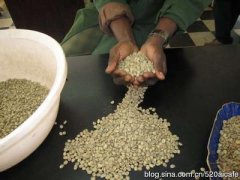
A brief introduction to the history and culture of the origin and development of fine Burundian coffee beans with excellent acidity
Burundi coffee was introduced by Belgian colonists in 1930. Unfortunately, many of these farms are on the border with war-torn Rwanda, putting pressure on coffee production. Coffee production in Burundi: Burundian coffee is now grown only on small farms. Almost all the coffee produced in Burundi is Arabian coffee beans.

The definition of Fine Coffee and its similarities and differences with individual Coffee beans American Fine Coffee Association Standard
[boutique coffee] as a proper term, boutique coffee (Specialty Coffee) was first proposed in the Tea and Coffee monthly (Tea Coffee Trade Journal) by Ms. Erna Knustsen, who is known as the godmother of boutique coffee, in 1974, showing that only in the most favorable micro-climate and soil and water can quality products with unique flavor be cultivated.

A brief introduction to the history and culture of the origin and development of Burundi Luo boutique coffee beans with almond aroma.
Burundi coffee was introduced by Belgian colonists in 1930. Unfortunately, many of these farms are on the border with war-torn Rwanda, putting pressure on coffee production. Coffee production in Burundi: Burundian coffee is now grown only on small farms. Almost all the coffee produced in Burundi is Arabian coffee beans.

How to develop boutique coffee in Uganda? introduction to the three major boutique coffee producing areas in Uganda
Not long ago, Ugandan specialty coffee was almost unheard of. This East African country is mainly famous for its Robusta crops. But times are changing: Arabica coffee production has boomed over the past decade, and Uganda has begun to become famous among the third wave of roasters and coffee lovers. What's so special about Ugandan coffee? Uganda is an excellent place to grow coffee. In the past

Refreshing and comfortable citrus taste of Panamanian Erida Manor Coffee Flavor Coffee introduction
Vice President Varela, candidate of the Naamist Party, won the presidential conference.

Costa Rican Coffee History _ introduction to the Flavor of Costa Rican Organic Coffee cultivation
For more information about coffee beans, please follow the Coffee Workshop (Wechat official account cafe_style) Educardo Matos History Costa Rica is a country next to Panama, located in the central United States, as a bridge between the North and the South, its location makes it a trading hub for aborigines. When outsiders arrive from the old world,

Introduction to the flavor and taste of Burundian boutique coffee beans in the growing environment.
There are two major ethnic groups in Burundi, and only about 15 percent of the Tutsi have ruled the country since the 16th century, controlling the civilian population, which is mainly made up of Hutu, plus a very small number of indigenous Twa. This abnormal social structure in which ethnic minorities occupy a high position has buried the evil seed of national instability, and in 1

Description of Sumatra Aceh Coffee Flavor in Jiayu Coffee producing area, Sumatra, Indonesia
The exchange of professional baristas please follow the coffee workshop (Wechat official account cafe_style) Jiayu Gayo Coffee production area introduction Aceh Special Administrative region is located in the northernmost part of Sumatra Island. The coffee growing areas are located around Lake Tawal (Lake Tawar) and the small town of Takengang (Takengon) on the hillside of Kayo Mountain. The coffee here is widely used for shade cultivation and does not use farmers at all.

The vast majority of Papua New Guinea coffee is organic.
The laws of history always tell us that a heterogeneous new civilization must bring a period or a certain degree of loss and pain to the recipient. But things look worse in Papua New Guinea, where what is happening can only be described as chaotic and bloody. No one can say exactly why. Frequent violence, endless tribal feuds, lack of resources

The hometown of Coffee: an introduction to the Cultural treatment of planting in Ethiopia
Professional coffee knowledge exchange more coffee bean information please follow the coffee workshop (Wechat official account cafe_style) among so many coffee producing areas in the world, Ethiopia can be said to be the most special one. The existence of coffee has been discovered here; here, there are places that fascinate countless coffee lovers, such as Yegashifi and Sidamo. [Esther]

Almond-scented boutique coffee beans in Burundi A brief introduction to geographical location, climate and altitude
Coffee production in Burundi: Burundian coffee is now grown only on small farms. Almost all coffee produced in Burundi is Arabian coffee beans, while coffee trees in Ngozi are planted at an altitude of more than 1200 meters. Suggested roasting method: medium to deep roasting ★★: good Burundian coffee market: Burundian coffee products are mostly exported to the United States,

Flavor description of coffee producing area in Burundi introduction of variety producing area by manor taste treatment method
There are two major ethnic groups in Burundi, and only about 15% of the Tutsi have ruled the country since the 16th century, controlling the civilian population, which is mainly made up of Hutu, plus a very small number of aboriginal Twa. This minority

Burundian Coffee with excellent acidity description of Burundian Coffee Flavor characteristics of Fine Coffee
There are many plateaus and mountains in Burundi, most of which are made up of the plateau on the east side of the East African Rift Valley. The national average elevation is 1600 meters, which is known as the mountain country. According to the topography of Burundi, it can be divided into three regions: the western plain, along the Ruzizi River, the Rift Albrtine plain, 774 to 1000 meters above sea level; and the central and western mountains, with an average elevation of 1700 meters, with the highest peak in Bujumbura.